
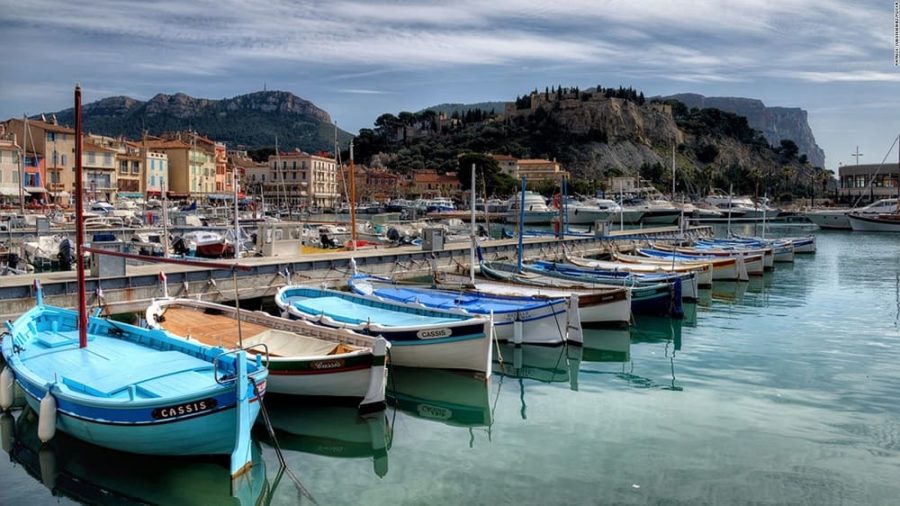
The calanques and Cassis. All the coastal resort spots usually (sadly) get leveled down into a touristy look: some more, some less. Cassis (or Cassi, if one goes fully French about it) has barely lost its pristine look of a fishing village. Of course, new building brings its own muddle and tells on the general look, the atmosphere — but here there is very little of it. And the village itself is small. Almost everyone who comes scatters off among the calanques, and it is mainly for this that they come here.
And a pity that is. Besides the calanques, Cassis has everything else that the famous resorts of the Côte d'Azur possess — and even more.
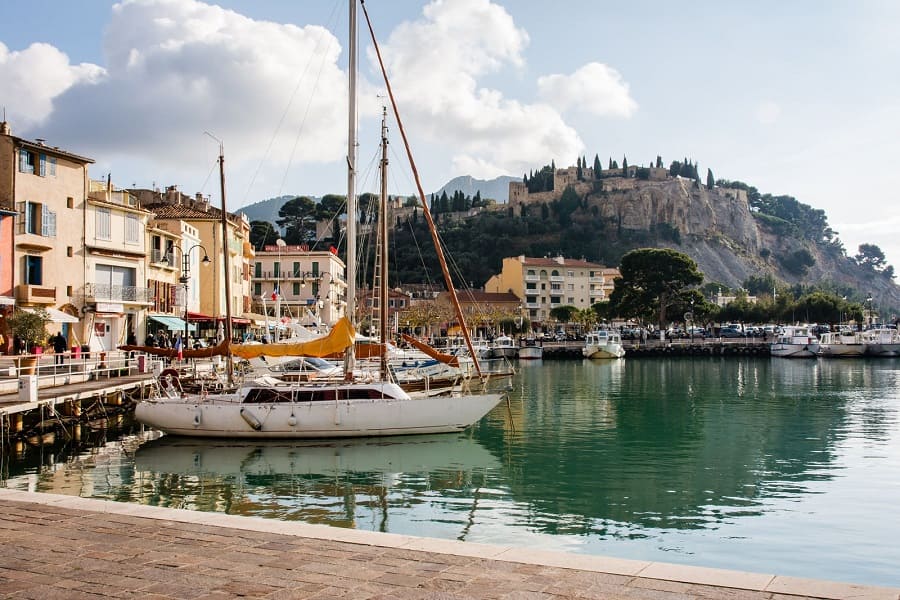
Why go to Cassis?
For beauty, for rest, and for enjoyment. You know, the way it is in the films about Provence? For in those films they almost always show the sea, even though the real Provence has little to do with the sea. Well, Cassis in this respect is an exception. Here there is both Provence and the sea. And the whole atmosphere, at almost every step — out of those films. And the calanques, of course.
Of the better-known ones, it is reminiscent of Villefranche-sur-Mer. Perhaps for its "dacha" aura (not to be confused with a resort one!), perhaps for its embankment. They are alike: only there it is Nice, and here it is Marseille.
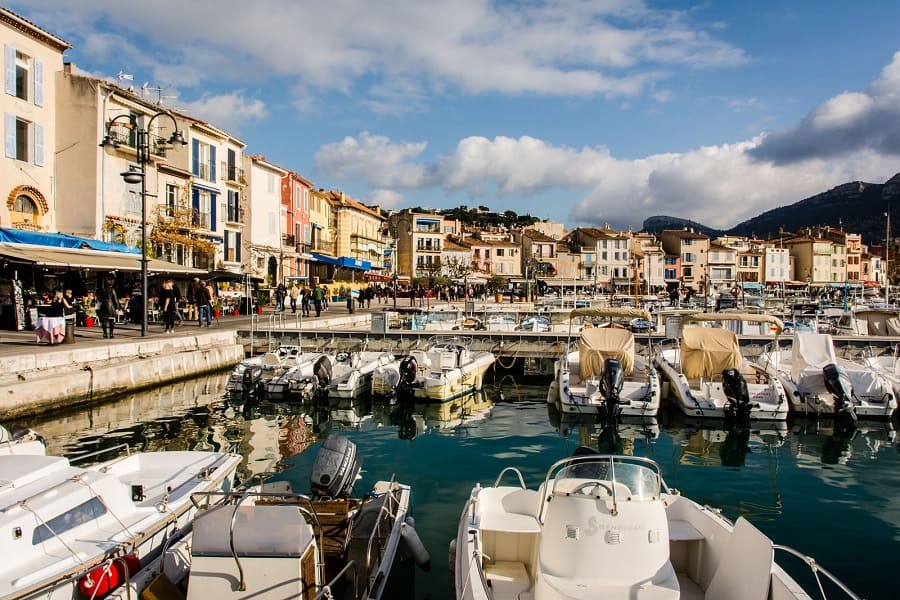
The Sights of Cassis
The oratories. Before the French Revolution, Cassis was dependent on the Bishop of Marseille. In those days the commune of Cassis was marked by great religiosity. The present-day town has preserved much of the cultural heritage of that time, among it a multitude of oratories framing the streets of Cassis.
As a rule, the oratories stand along the road or are made in the form of a pointed, or sometimes semicircular, arch — a niche in a wall. Usually a wrought-iron cross completes them. In some, sculptures dedicated to this or that saint have survived to this day. Today one can count 11 such oratories in Cassis.
Chapels:
- The Chapel of the Town Hall. Chapelle de l'Hôtel de Ville. It is on the second floor of the building (behind the mayor's office), dating from 1649.
- The Chapel of the Holy Cross of Jerusalem. Chapelle Sainte-Croix de Jérusalem. Surrounded by cedar trees on the northeastern side of Cassis, this chapel dates from the 18th century.
- The Chapelle de Port-Miou. This little chapel was built in 1649 and dedicated to the Virgin Mary. It was raised in honor of deliverance from an epidemic of the plague and consecrated under the name Notre-Dame de Santé.
The Fountain of the 4 Nations. The recently made fountain is a copy of the previous one, built in 1690. The monument reproduces the Paris fountain made in 1686 in honor of the victories of Louis XIV.
What Cassis Is Famous For
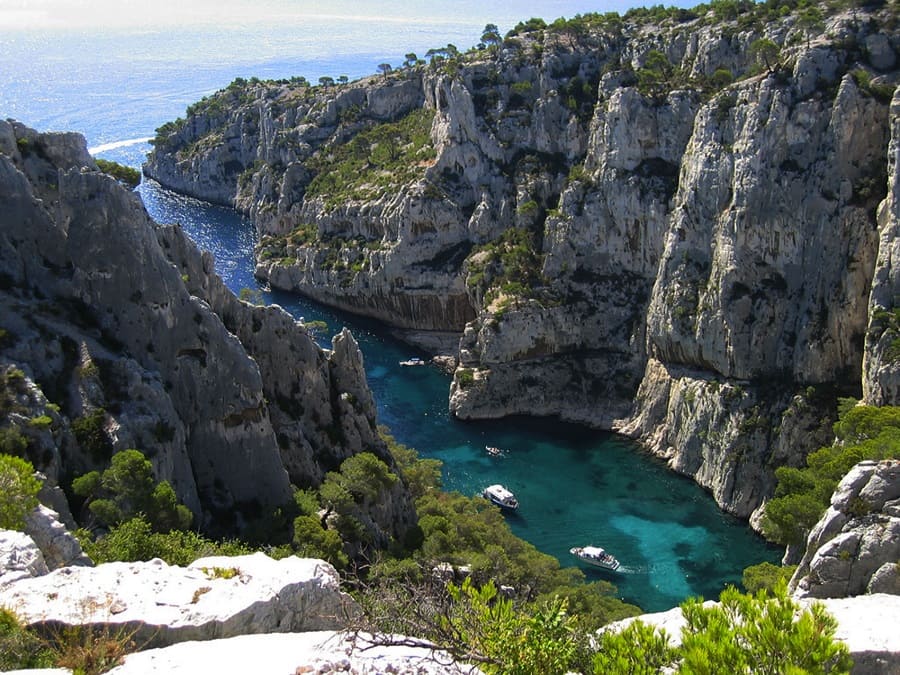
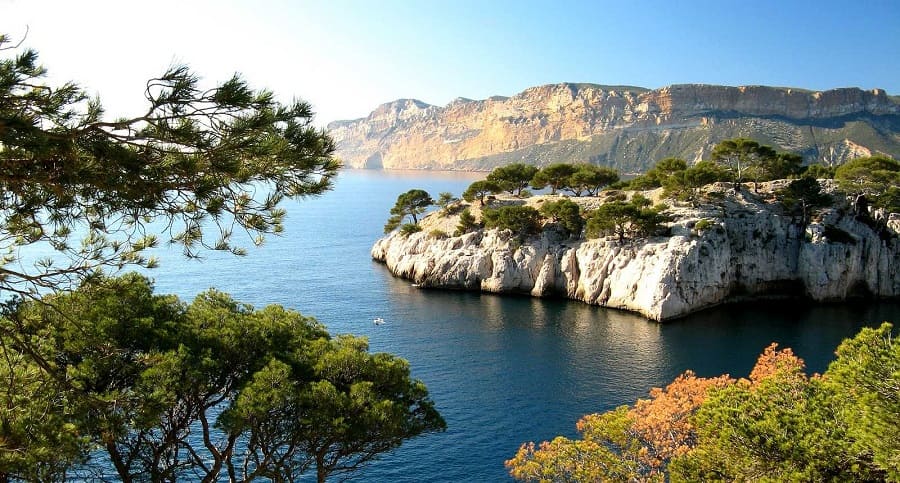
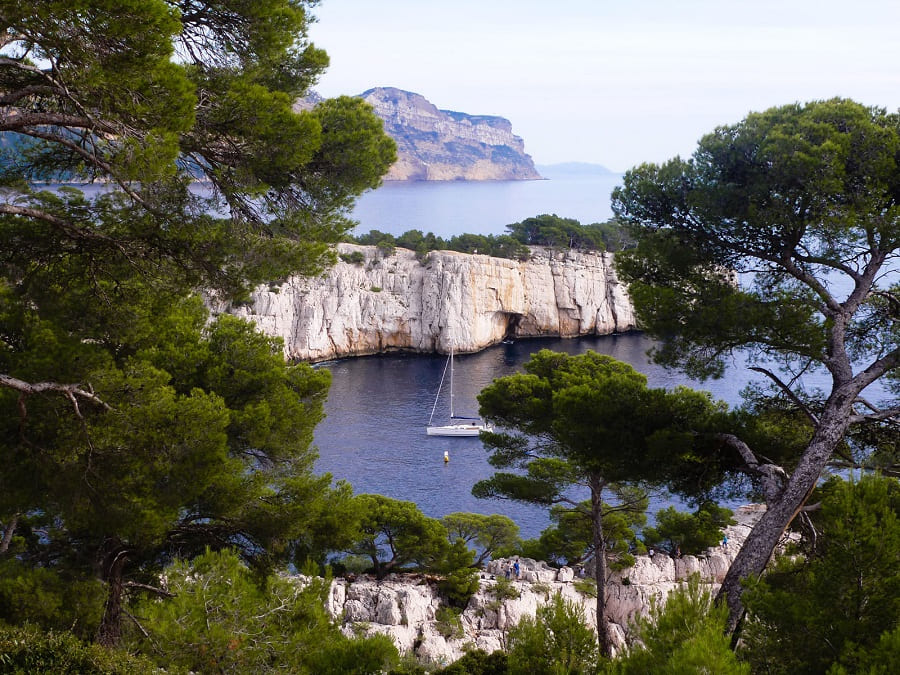
The calanques. Yes, first and foremost. They are precisely what keeps travelers from taking a proper look at and taking in the village itself; they draw onto themselves almost all the free time of those who come, and they are also the chief showcase of the locale. Perhaps this is for the better — for those who understand and know more.
The beauty, of course, is stunning. And the physical activity — too. To get a good look at it all, you will have to cover a fair few kilometers, and uphill and down at that, so a bit of getting healthier is guaranteed on top of the scenery. Unless, of course, you look from the sea, from the pleasure boats: but that is not the same thing at all.
Cap Canaille. It is considered the highest sea cliff, the highest coastal bluff, in Europe.
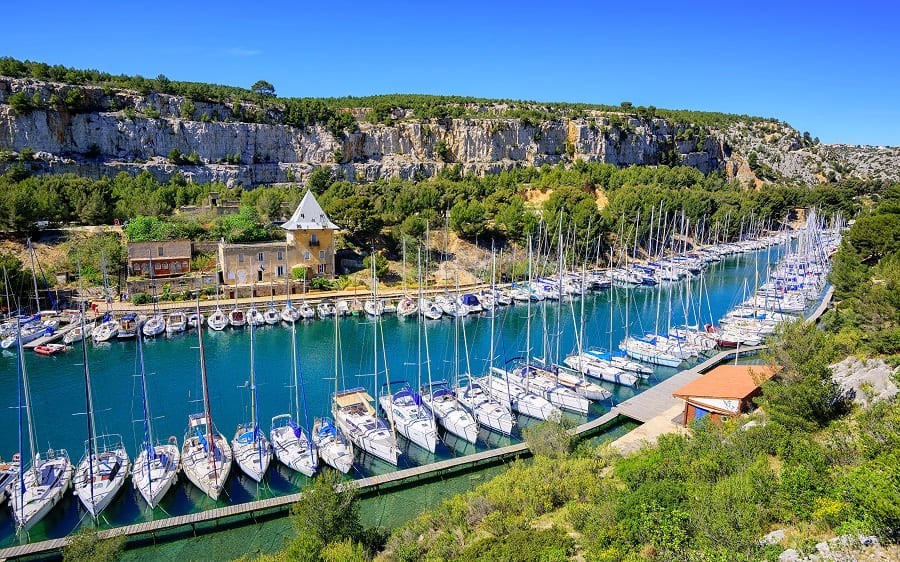
The whole coastal strip. All the calanques and the routes — and that is more than 20 km of marked ones alone.
The wines
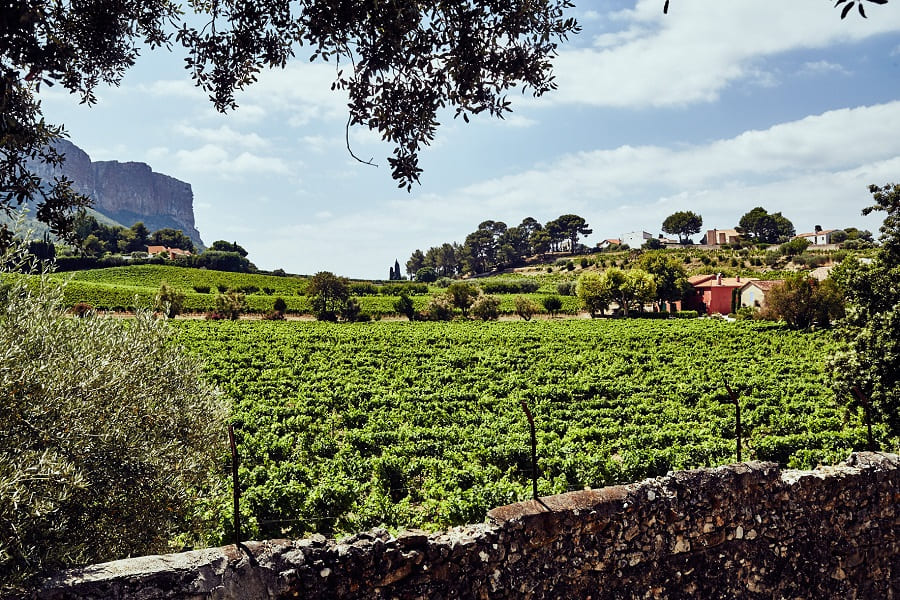
200 hectares of vineyards, which give this place its Provençal landscape, its magical atmosphere, and its popularity among connoisseurs. AOC Cassis means above all white wines, which are considered among the very best in Provence. They received the AOC mark of origin among the first in the country, back in 1936.
Among the local varieties is the legendary Ugni — one of the oldest white-grape varieties in Provence (and in France); the Greeks brought it as far back as 2,600 years ago. Incidentally, the surroundings of Marseille (Massalia, as it then was) are the beginning of French winemaking altogether, the first grapevines: the Greeks, of course.

The calanques — access and fine points
From June 1 to September 30, access to the calanques is regulated depending on weather conditions.
Orange level — access permitted.
Red level — access permitted only from 6 to 11 in the morning; afterward, forbidden.
Black level — access forbidden.
Options:
On foot along the laid-out routes (hard going, of course, but beautiful).
By little boat (comfortable, fresh, everything at once).
By car (here and there are parking lots, and from there on it is on foot).
The calanques are a hike
From Marseille to Cassis, some 20 km of marked tourist routes along the calanques await you. One must remember that the road to the calanques is often rather narrow, with climbs, so the car had better be compact, but powerful. In high season, passage to some of the calanques is restricted. In the off-season, the restrictions most often apply only on weekends and holidays. To a number of the calanques it is altogether impossible to drive. Even if you go by car, it is advisable to dress and shoe yourself suitably, since you will have to walk anyway, and a good deal. By car you can see the calanques of Goudes, Sormiou, Morgiou, Sugiton, Port-Miou. Beside them are parking lots (paid). To the other calanques you will have to walk a good while longer.
The calanques by little boat. Regular cruises set off from the ports of Marseille, Cassis, and La Ciotat. The cost of a cruise varies depending on the length of the route (that is, the number of calanques visited). It starts from 12 euros for an adult, and tops out at around 35 euros. For children under 10, there is a reduced rate. Children under 3 — free, or for a token charge of 1 euro. Tickets can be bought right at the port; they are usually sold half an hour before the trip begins. Departures — several times a day in high season (from May to September, the very highest being July–August). In mid-season (February, March, April, October, November) — a couple of times a day.
What was left "out of the boat," but matters
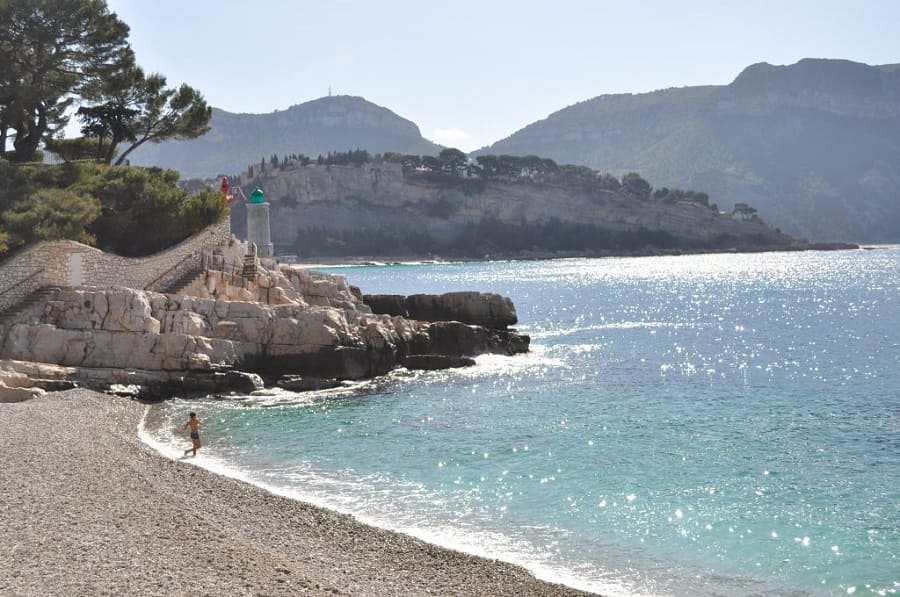
The beaches. I once came across a description in a guidebook: "a popular beach resort for those who want to avoid the crowds." The combination of the word "popular" and the remark "avoid the crowds" creates, of course, a dissonance — but there is a large measure of truth in it. Beachgoers, in fact, do not come here. Those who come are the ones who need the sea. Most of the beaches are pebble, but right in town by the port there is a small sandy one. And all the beaches of the coves are at your service — just don't be lazy. A calanque — a beach, a calanque — a beach...
The Camargo Foundation (LA FONDATION CAMARGO)
It is among the TOP 5 best residencies in Europe. It was founded more than 40 years ago by the artist and philanthropist Jerome Hill. The Camargo Foundation offers residencies to artists, researchers, thinkers, art critics, curators, art historians, translators, and writers. Knowing French is not required, but taking an interest in French culture — that is a must. At the residency one may spend 6, 8, or 11 weeks in autumn and spring, receiving a stipend of $1,000 a month. Food and travel are also paid for by the Foundation, and children or partners may accompany the resident. To leave the residency, however, even for the weekend, is strictly forbidden.
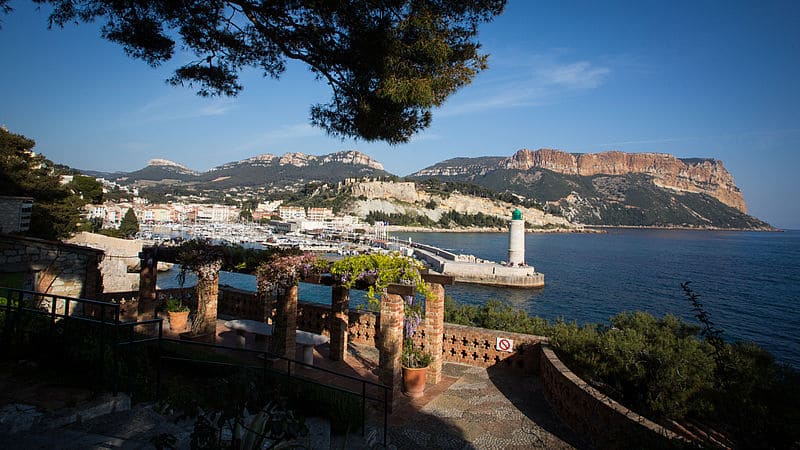
To take part in the residency, you must describe the project you plan, provide a résumé, letters of recommendation, and samples of your work. And if you are lucky — one of the 12 rooms, the library, the open-air theater, the art and music studio will be at your service. Once a week it is open to visitors. An interesting and beautiful place, with a wonderful view.
The Foundation's website: The Camargo Foundation
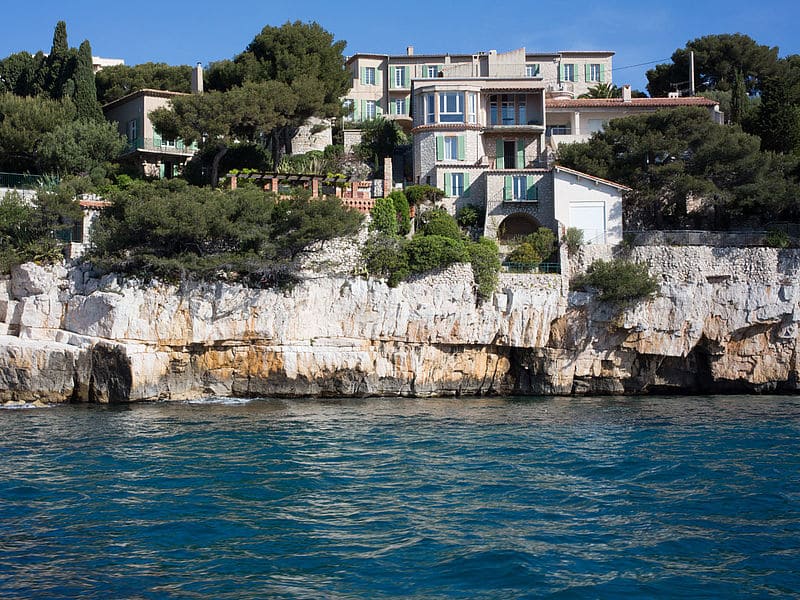
All the joys that befit Provence: chapels, fountains, villas, a château.
Getting Here and Away
If by public transport, then the best way to Cassis is from Marseille.
By bus from Castellane Prado (mind out, the stop is inconspicuous!) it is 40 minutes (direct); it stops 5 minutes' walk from the port.
By train from the main station, Gare de Marseille-Saint-Charles, it is 22 minutes (direct), but from the station it is another 40 minutes or so on foot. Then again, the way is lovely — you will already be walking through Provence.
From Cassis, if by public transport — unquestionably — Marseille and Aix-en-Provence. To Aix it is an hour and a half to two hours, depending on the wait for the connection in Marseille.
To all the other places a car is already very much to be desired, and here the list is endless. But! In Cassis there is no car rental. Not a single one. The nearest is in La Ciotat, which is about 5 minutes by bus.
Cassis translates as "blackcurrant." You know — it does fit. Tasty — for those who understand. Incredibly good for you. Not as popular as the strawberry, and, unlike it — the currant is never bland, the way strawberries on the shelves are. Always just as it was in childhood.
A riddle in parting. Frédéric Mistral has a saying that I chose not to use in the text — it stands in every review of Cassis: it has been run into the ground by now. But it exists, and Mistral knew these parts well.
Which one?
 Ave France