
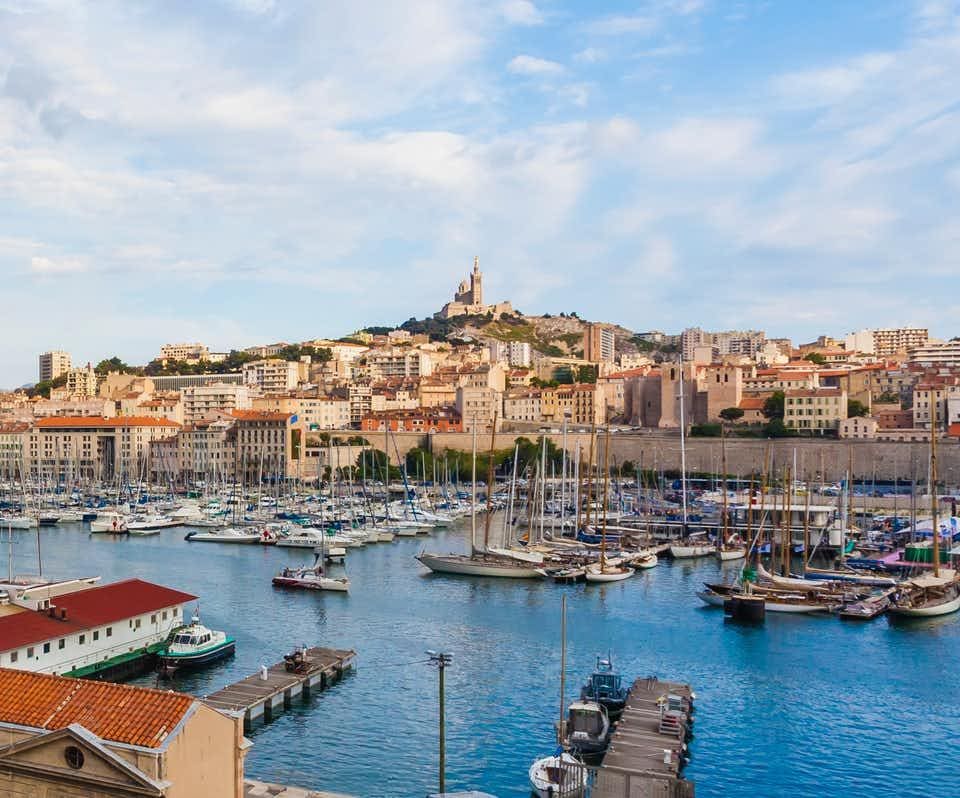
Into Marseille, through the port, the world comes in every day. And it is precisely in Marseille that you can have a look at it, in one place, the real one. Marseille differs from the rest of France in that it does not try to prettify itself. And another thing: you shouldn't expect it to do anything for you.
An example: it was announced that Marseille would become the "Cultural Capital of Europe" for 2013. By that very year, more than half of the planned sites and works were not ready and not done. And the point here is not even the laziness and slovenliness partly characteristic of southern peoples. It looks rather as if here they simply do not understand — and what for? On the other hand, you can be sure that everything here is not done for a date and not to draw tourists. That, probably, is the very reason so many people love it: everything is real. Here they do not try especially hard to preserve or restore the traces of the past; there is much that is unsightly here, but the magnificent and the alluring that does exist — exists because it is necessary for everyday life.
Through the port the world comes in here every day, and over the long history of it perhaps even too much has come in and stayed. But there it is, just as it is, and to change a whole world is unrealistic. So come and have a look at it.
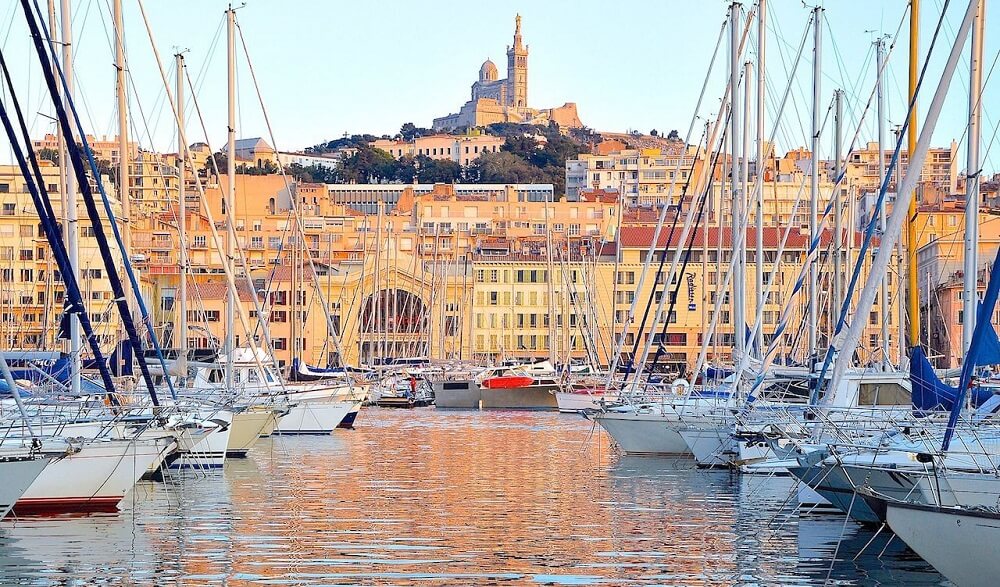
Marseille — the Corsairs
A city of adventure. Mediterranean, a port city, bright and noisy, with markets, islands and prisons on them, with fishermen and sailors — these are ready-made pictures for adventure books and films. A Tower of Babel of languages and nationalities, dangerous quarters, tiles with thanks to the Virgin Mary from fishermen's wives, laundry drying in the streets. In Marseille, as in a kaleidoscope, different little pieces are forever giving way to one another — of Odessa and Naples, of Lisbon and Madrid, and even of snow-white Cretan houses. A sword and a musket, pieces of eight, the dust from under a carriage's wheels or a frigate's broadside fired at the town — in this city all of that would still be in its place even now. Although adventures come not only with a sword, and Luc Besson's "Taxi 1-2-3" film series is the proof of it.
Perhaps you will not land in an adventure here (and there's no need to), but you will most certainly feel it.
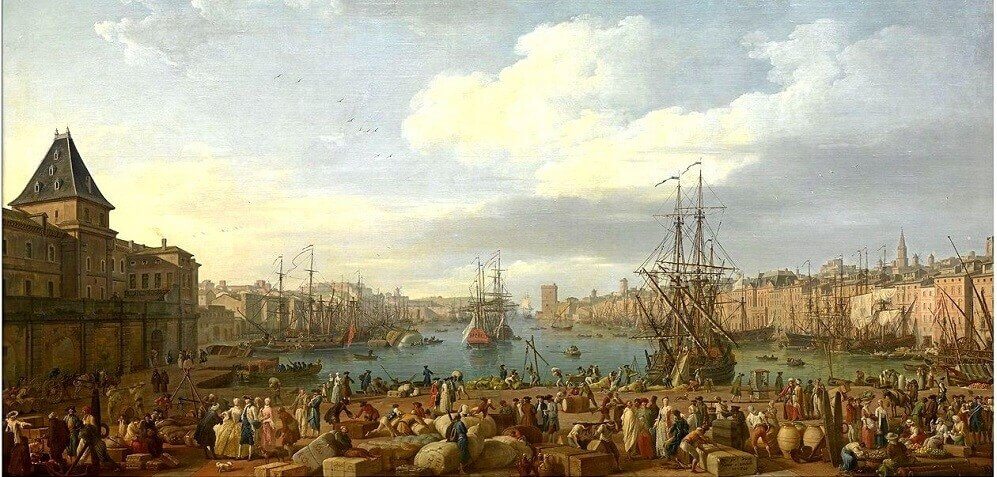
Marseille — the Maghreb
Beautifully called "the countries of the Maghreb," Algeria, Tunisia, Morocco, and other countries of North Africa have been suppliers of Marseille's population for centuries. To avoid this would have been possible only by moving Marseille into the center of the Auvergne and shrinking it a thousandfold. The fullness, the overcrowdedness of the city with people from there now exceeds all reasonable bounds — and with all the attendant downsides. One of the faces of Marseille is Arab — gaudy, bright, with a heap of children and idling men: and very troubled.
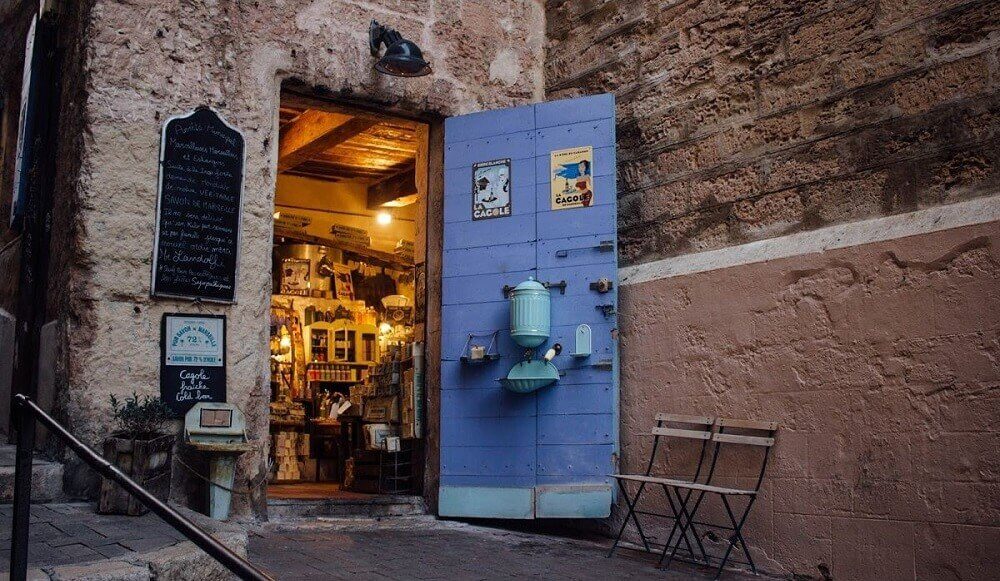
Le Panier is the oldest quarter of Marseille, and, as one of the consequences, it has exactly that look. And yet here, as it happens, not everything is sad. Unlike the more residential districts — the 15th, for example — this quarter is very authentic, beautiful, and original. You absolutely must go here, if only to the Rue du Panier, to see that the Maghreb is not always a bad thing. All the more so since there is a great deal of France here too. Le Panier translates as "the basket," and this basket is full of all sorts of lovely and likable things, old, useful and useless.

Marseille — France
If you want France in all its fullness, its magnificence and its unsightliness — this is the place for you. It is precisely here that she is real, and not in the out-of-the-way little villages: there she is too scarce, and she is hemmed in. And Paris is not France, just as Moscow is not Russia. The drawling Provençal accent and the typical French cafés with their equally typical regulars — that is Marseille.
Oysters (with aioli sauce, without fail), the signature bouillabaisse, and pastis with its strict set of requirements — that is Marseille. The palace-houses and the stunning cathedrals — that too. The haphazardness and the laziness side by side with the wildest bureaucracy, the dangerous quarters, the factories and workshops of lavender soap — all that is Marseille too.
All of it is France, and here too are those who sing her praises, such as Marcel Pagnol, Monet, and Renoir. With the Marseillaise, on July 30, 1792, the Marseille volunteer battalion entered Paris. From here, too, comes the national pastime — pétanque (500 courts!).

© natgeo
The Old Port
The Old Port begins early in the morning, with the fish market. And, since in Marseille tourists are not paid much attention — the market here too is the real thing. Everyone shops here, the locals first of all. The whole catch is still stirring, the local housewives are exacting, and the non-locals lose themselves in the variety and freeze in admiration. It all carries on with the numerous little restaurants and cafés, the famous "Michelin" ones as well as those simply beloved by the locals. Sit down and relax: you are in Marseille.
Here it is good to stroll at any hour, and from here it is close to most of the landmark places — the Abbey of Saint-Victor, the Basilica of Notre-Dame de la Garde, the cathedral of Sainte-Marie-Majeure. In the evening you should come back here for the most beautiful sunset and the view of the mountains.
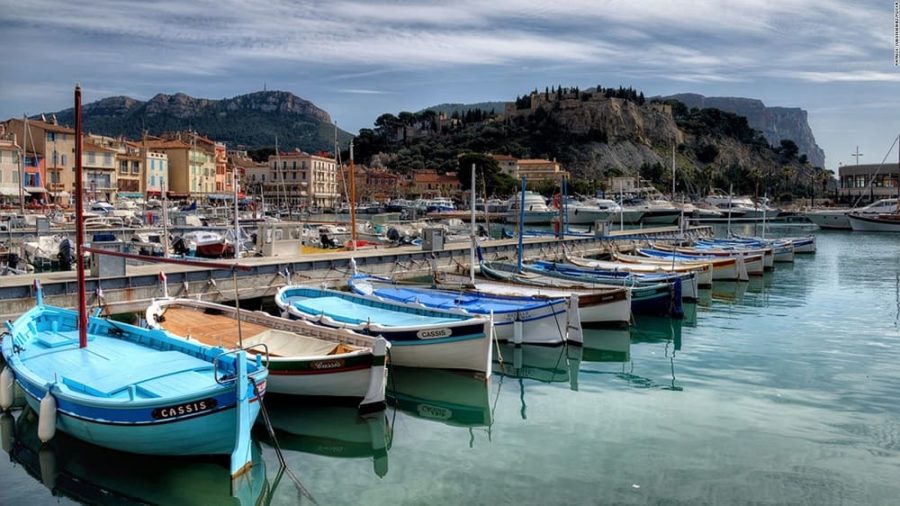
For all its size and all its variety, Marseille is first and foremost the Old Port. Here is its spirit and its genius loci.

Markets and Shopping
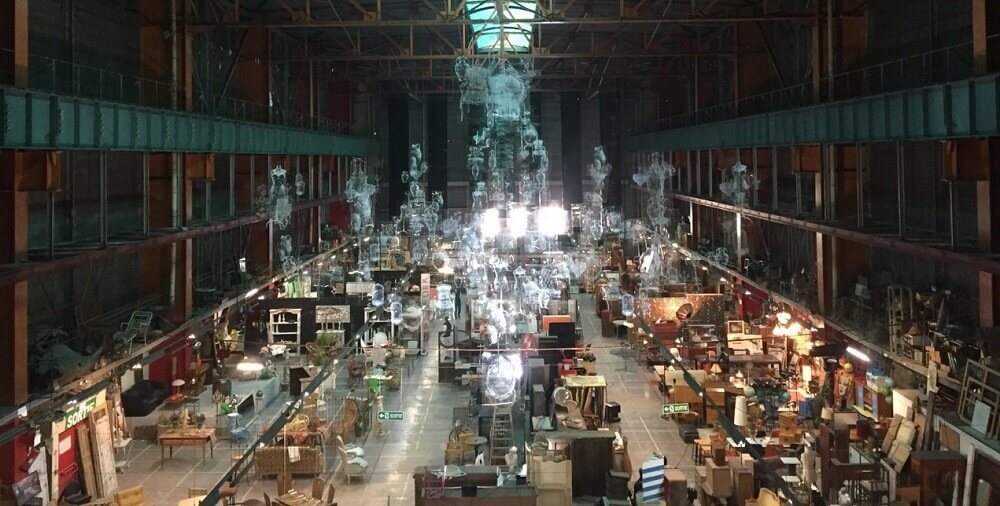
Of course, and without question, the morning fish market, the Marché des Quais du Belges in the Old Port — we have already written about it. But Marseille even without it is a city for shopping. For lovers of old things — the antique dealers' quarter on rue Edmond Rostand. A multitude of shops, and each with its own face: a stairwell in a residential building of the late 19th century, a little courtyard with never-ending bookshelves...
The most famous of the Marseille markets is "Emmaüs." True, it is, rather, not even a flea market, but a whole organization and a way of life. The more traditional one is the Puces de Marseille, resembling the flea market in Paris. The quarter around the Noailles metro station carries you out of Europe and into Asia: spices, basins of olives, tea houses, sweets. And then the food market that the local residents go shopping at: the Capucins, near La Canebière. Here, as it happens, you can buy (and taste!) everything the region and Marseille are famed for — oil and pastis, cheeses: this is France already.
© JFE/Gomet
Julia Child. The guru of French cooking and the darling of all the housewives of that time, Julia Child lived a wonderful period of her life in Marseille, and loved this city very much.
...I was struck by the richness of the free, emotional life — not a city, but a bouillabaisse...
sugaranddinosaurs.blogspot.com
The Beaches of Marseille
Prado. One of the most popular. 20 hectares, taking in green areas, picnic spots, and first-aid stations. In season, lifeguards are on duty at the beach. The sea off the shore is shallow and suitable for bathing with children, though the fine shingle will not be to everyone's liking.
Borély. Sand. It is divided into two parts. On the public ground there is a volleyball court and a children's play area. The other half of the beach belongs to the seaside restaurants. This is the optimal choice for those who cannot bear the crush of the municipal beaches.
Bonneveine. Good for bathing with children — both because of the shallow bottom near the shore and thanks to the skate park located nearby.
Huveaune. A very picturesque beach. Surfers took a liking to it long ago — because of the configuration of the shores, strong winds are frequent there.
Popular Routes
The Old Town and the Le Panier quarter:
- Tourist office and Convention Bureau: the history of La Canebière.
- The Old Port of Marseille: the history of the ancient city.
- The ferry and the Marseille town hall.
- Hôtel-Dieu: the history of the Le Panier quarter.
- Place de Lenche.
- The Church of Saint-Laurent.
- MuCEM, the Mediterranean villa, the Museum of Provence.
- The Cathedral of La Major.
- Vieille Charité: a former poorhouse, now turned into a museum.
- Place des Moulins.
- Hôtel de Cabre: one of the oldest houses in Marseille.
- Grand Rue — Rue Fiocca.
A historical trail through the city: Marseille Tourist Office — Marseille History Museum — Rue Henri Barbusse — Rue Fiocca — Grand Rue — Rue Caisserie — Avenue Saint-Jean — Church of Saint-Laurent — MuCEM — Fort Saint-Jean, the Mediterranean gardens.
How to get there:
Bus from the airport to Saint-Charles station: 20–25 min. From the major cities, TGV trains. Paris: 3 hours 20 min., Avignon: 1 hour. Nice: 2 hours 36 min. (train). Aix-en-Provence: 30 min. (bus), 42 min. (train).
 Ave France