
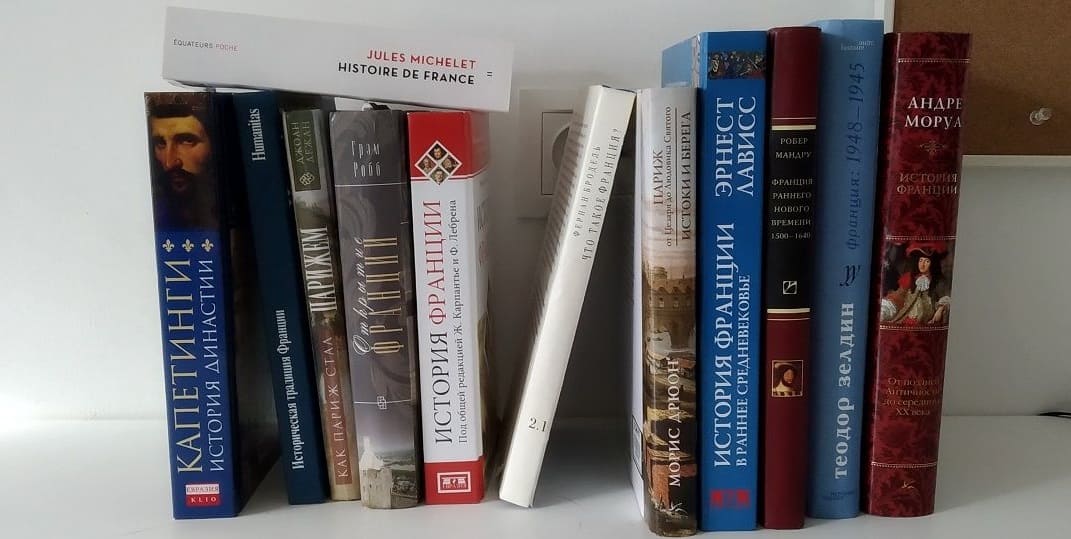
Books on the history of France are written the same way the French themselves live. What matters most is the person, his thinking and his life, not dates and events. What people felt during historical events, what their surroundings and daily life were like, what troubled them.
It is not for nothing that the Annales school arose in France — it is precisely for the French that the priority of the local, even the parochial, over the global and even the national is so important. History, in the eyes of the French, is a social science, and is impossible without cultural context.
And that is how the history of France ought to appear to us as well.
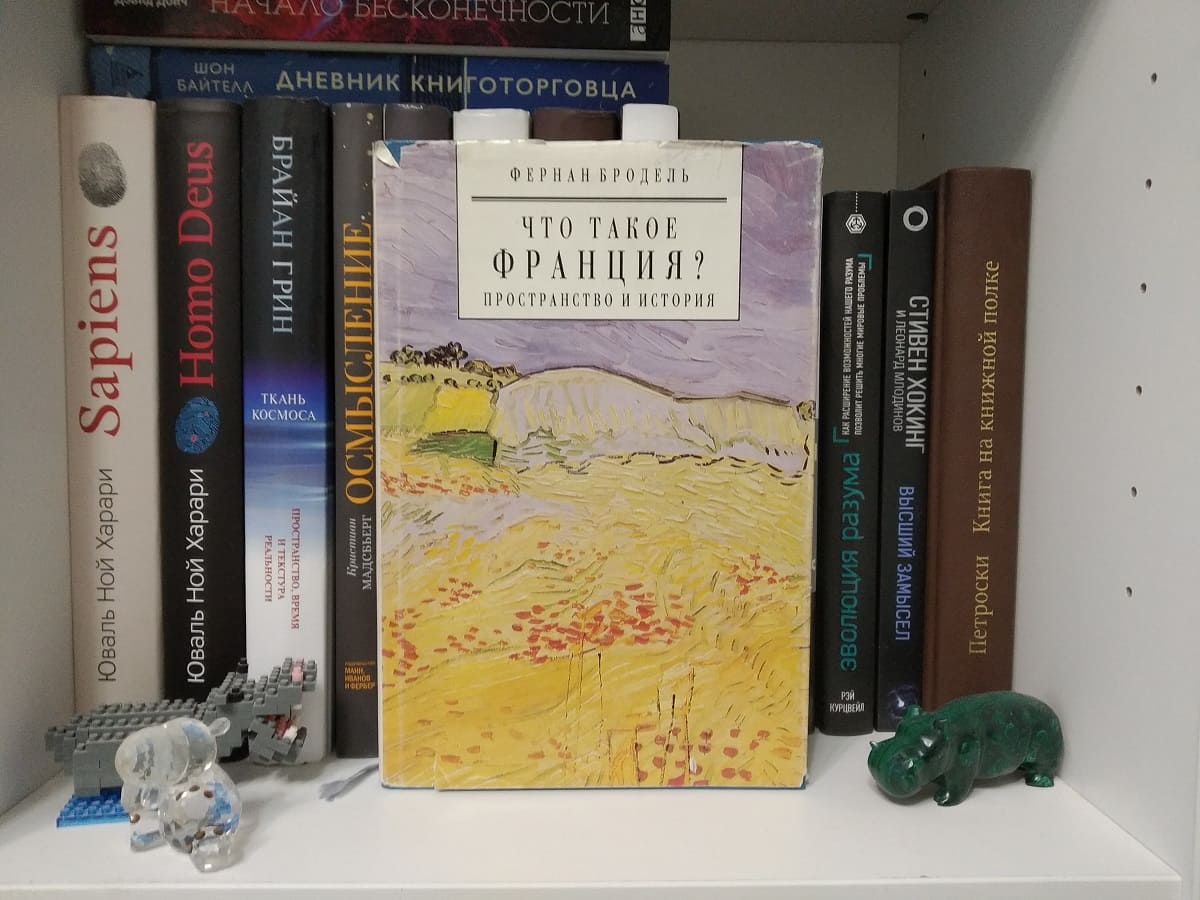
Fernand Braudel, "The Identity of France — Space and History"
The Annales school in all its beauty and depth. Braudel strives for us to understand France, with all its merits and shortcomings. This is indeed a work of history — but it reads not like a dry scholarly inquiry, but with endless interest. And with love for France. If you want to understand France more than the ordinary tourist, émigré, or expat does, this book is a must, a must to read.
What is France? Do you know?
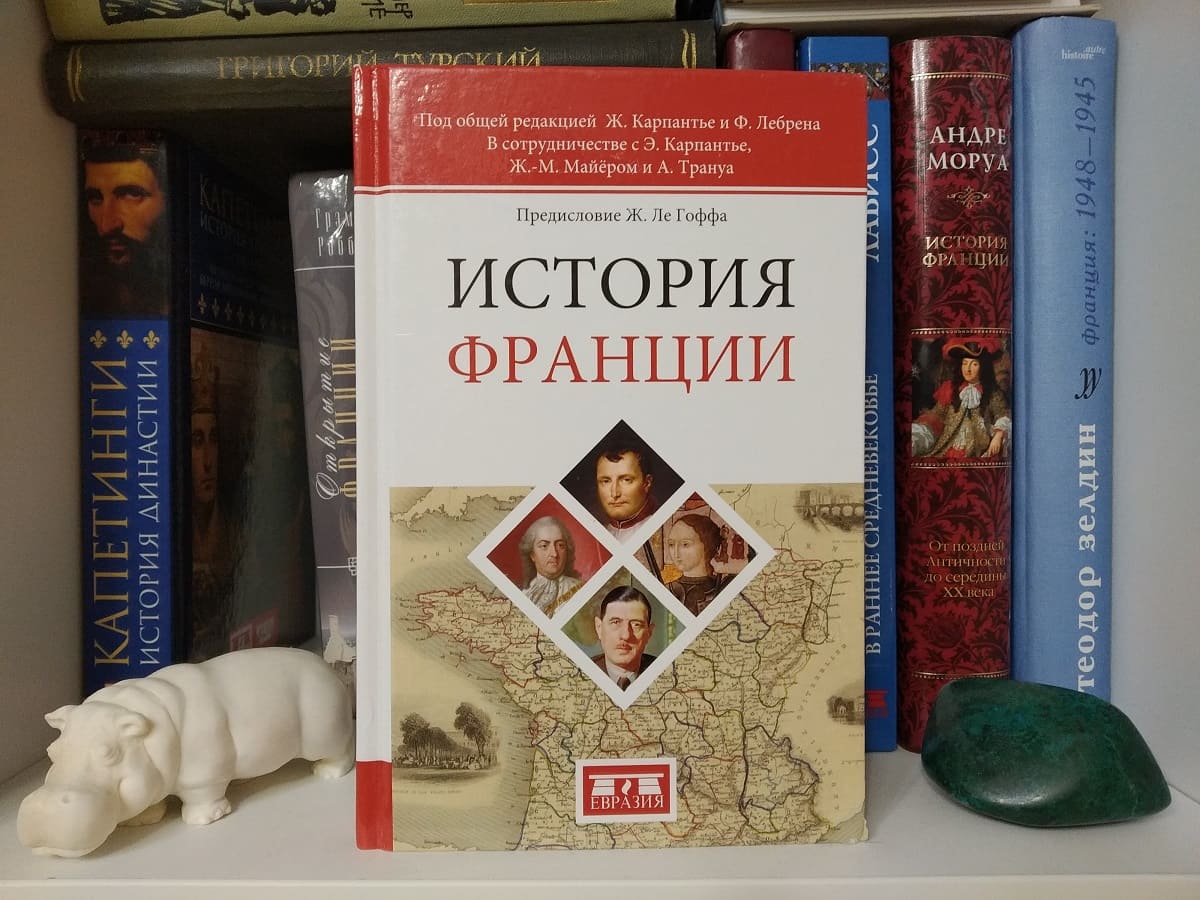
Books on the history of France — J. Carpentier, F. Lebrun (eds.). "A History of France"
J. Carpentier and F. Lebrun, under whose general editorship the book came out, have produced a documented and accessible work. The history of France is reflected here: 1) At a very good scholarly level. 2) In a single volume. Together, that is a great rarity.
One may quite safely begin studying the history of France with this book: anyone may, and without any apprehension whatsoever. The highest scholarly level, plain and clear language. Interesting sketches on the two or three most important documents at the end of each chapter, and short summaries. History for everyone — but ideally calibrated, and strictly factual, without conjecture.
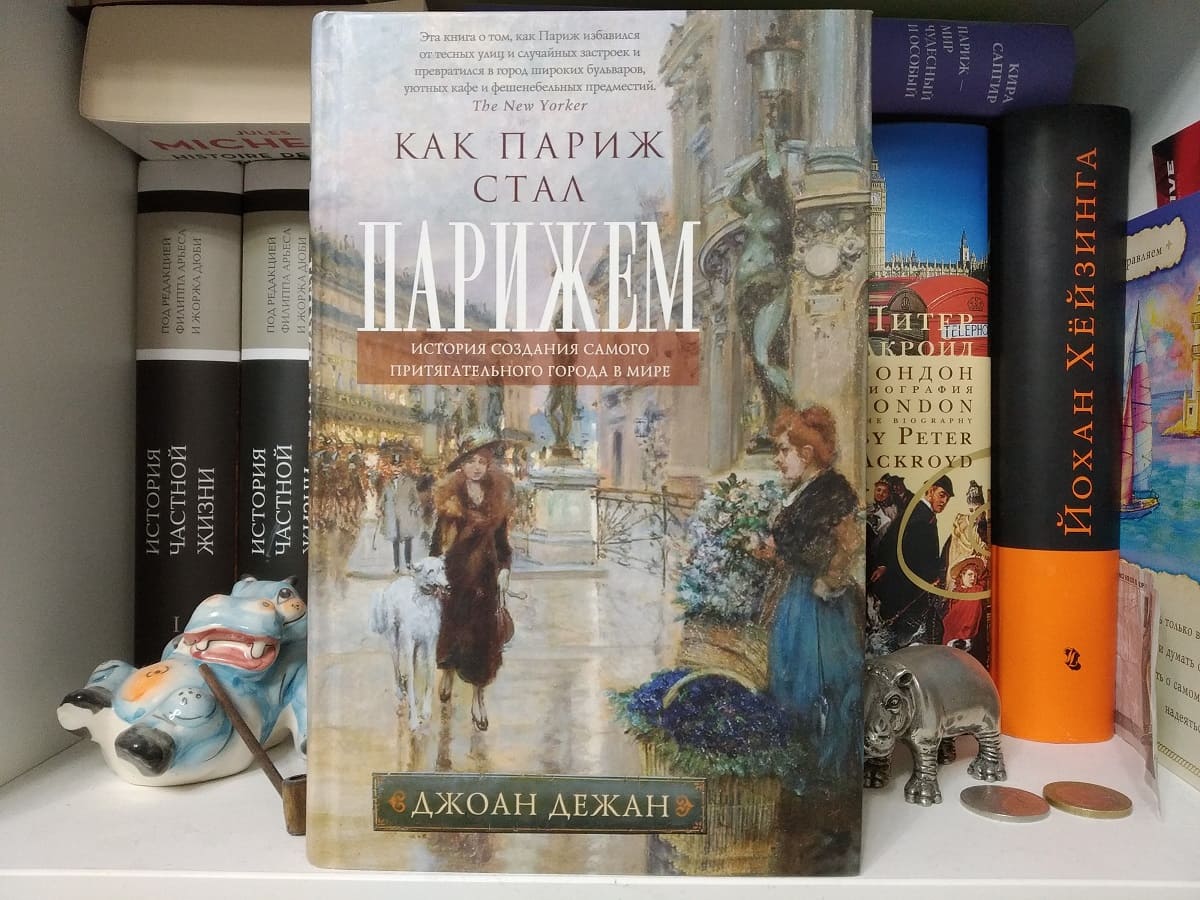
Joan DeJean. "How Paris Became Paris"
Joan DeJean has written a magnificent book about the City of Light. Only a few episodes, only 3 kings, only one century. But in that time Paris becomes the city in which all that will be, will be. The Bastille will be torn down, and Coco Chanel will reign. Baron Haussmann's boulevards and the Impressionists will become possible. It will yet become Paris. But it begins to become Paris then, in the time DeJean writes about.
Joan DeJean's book is probably not a work of scholarly history in the strict and classical sense. It shows only certain episodes of the making of Paris. And it illustrates wonderfully how and when the style, the brilliance, the level of Paris began to set. How the myth of Paris was born...
The myth that lives on to this day.
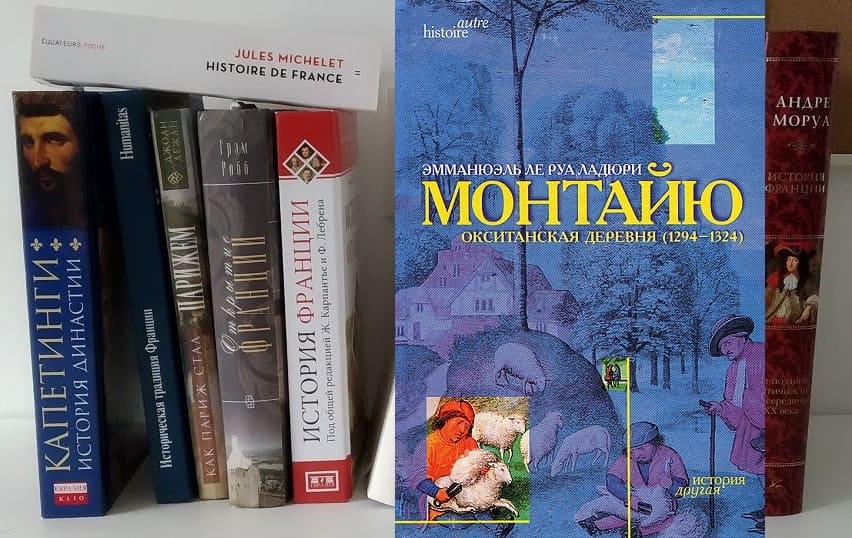
Books on the history of France — Emmanuel Le Roy Ladurie. "Montaillou, the Occitan Village (1294–1324)"
A monograph by the French historian Emmanuel Le Roy Ladurie. As of 2002, more than 2 million copies of the book had been sold, which makes it one of the most commercially successful books on history. Ladurie reconstructed the minutest details of the lives of the peasants of the southern French village of Montaillou at the turn of the 13th and 14th centuries.
Le Roy Ladurie's book is considered one of the classic works of microhistory. I think you will like the method of "microhistory" too: the attempt simply to see, against the global backdrop, a living person, and through him — a living society.
Microhistory is not Clovis, nor Henri IV. It is us.
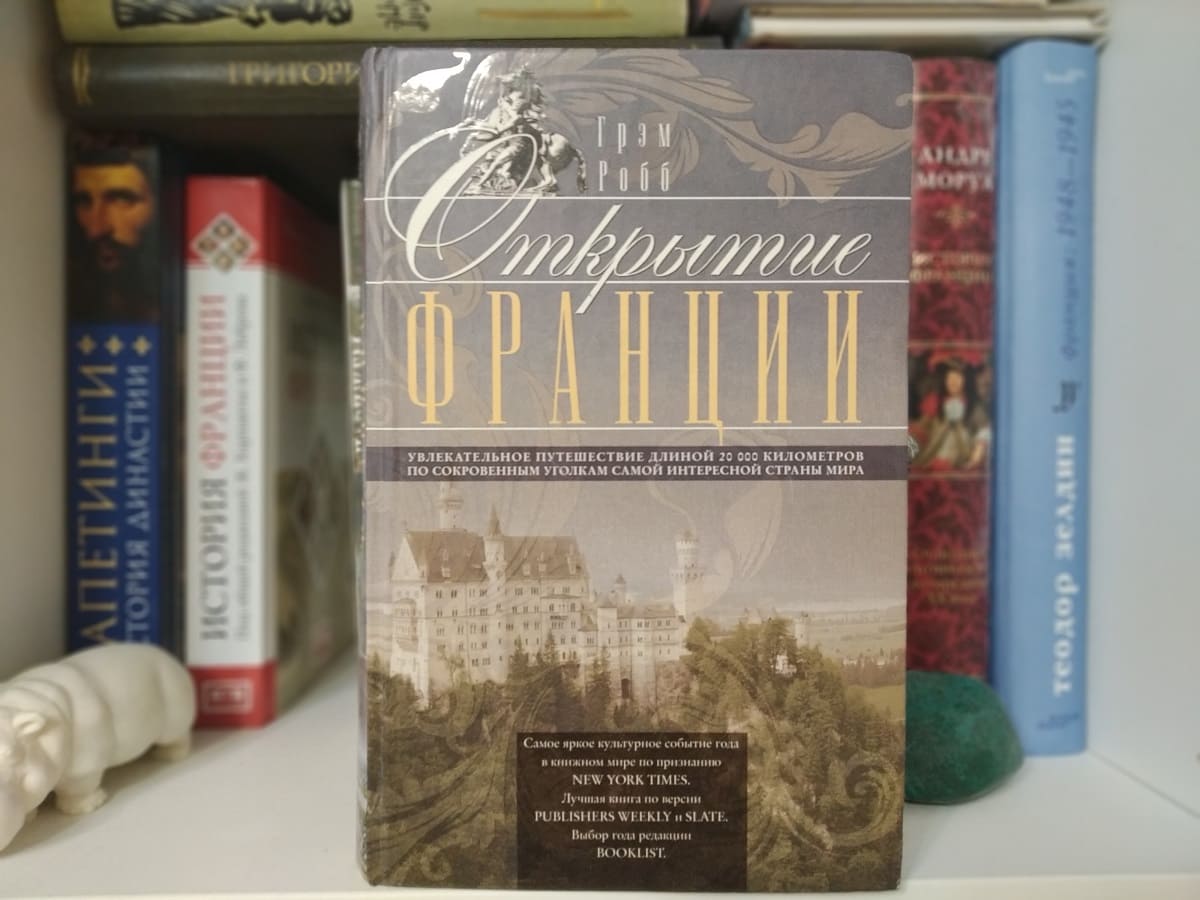
Graham Robb. The Discovery of France. A mysterious continent...
This is truly a discovery of a country, with a colossal number of interesting and little-known details. Having barely touched on Paris, the author has shown us the regions and events that were of little interest to the "classical historians." But through travels, migrations, and myths, these regions too were becoming France — and France was in them.
Make this journey yourself: "A captivating journey of 20,000 kilometers into the country's most hidden corners."
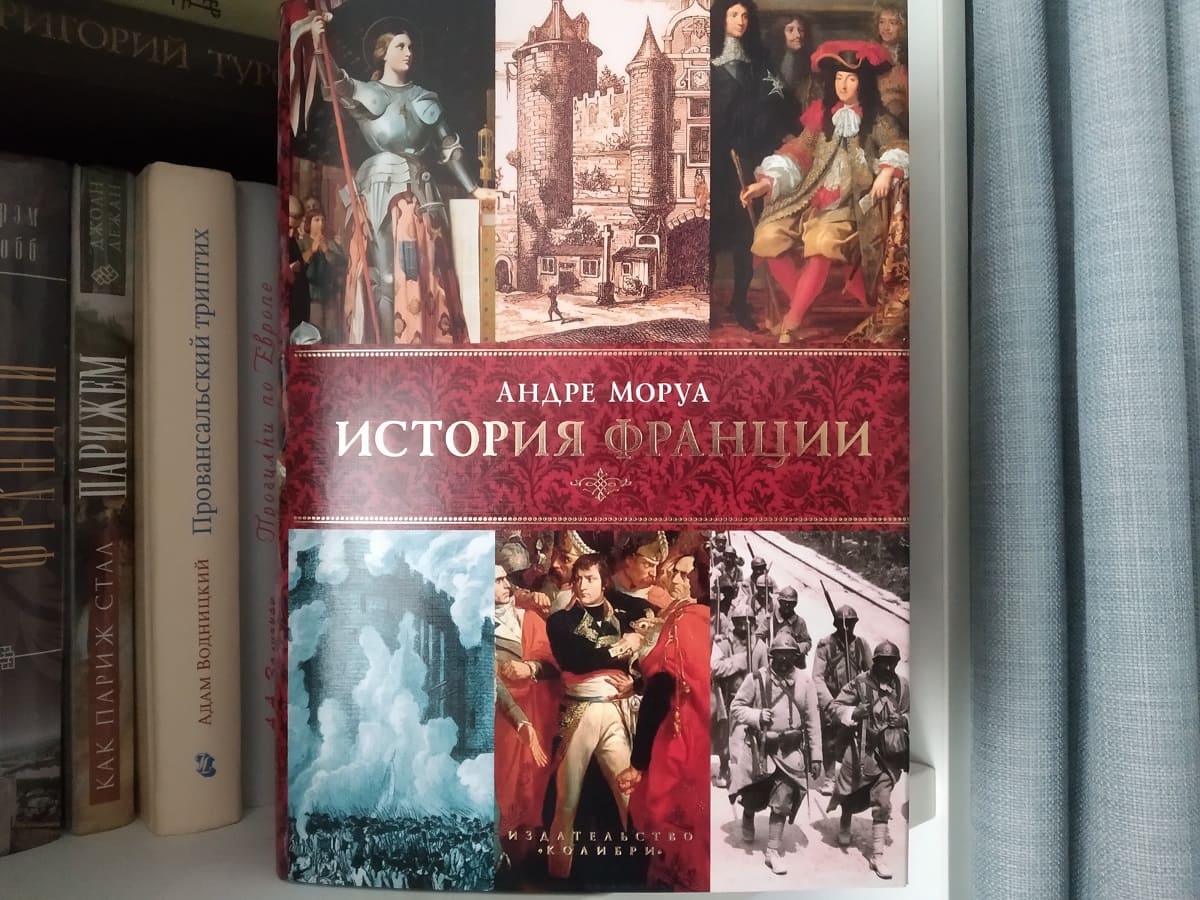
Books on the history of France — André Maurois, "A History of France"
A huge, fat volume. A staggering number of the most varied details, scenes, and the smallest of events. Out of which movements of this or that figure a given historical event arose, why everything happened this way and not otherwise — that is what is placed at the heart of it. Why did France become France? It is history — but, rather, fictionalized. Interesting. A lot of it.
This book is perhaps his chief historical work. From the time of late antiquity to the start of the Revolution of the 18th century, drawing on a wide range of sources, Maurois creates a very vivid picture of the past. Some of the personal judgments may, perhaps, have been excessive for an impartial historian (but did he want to be one?), but how can one hold back, if you are a Frenchman, if this is your France...
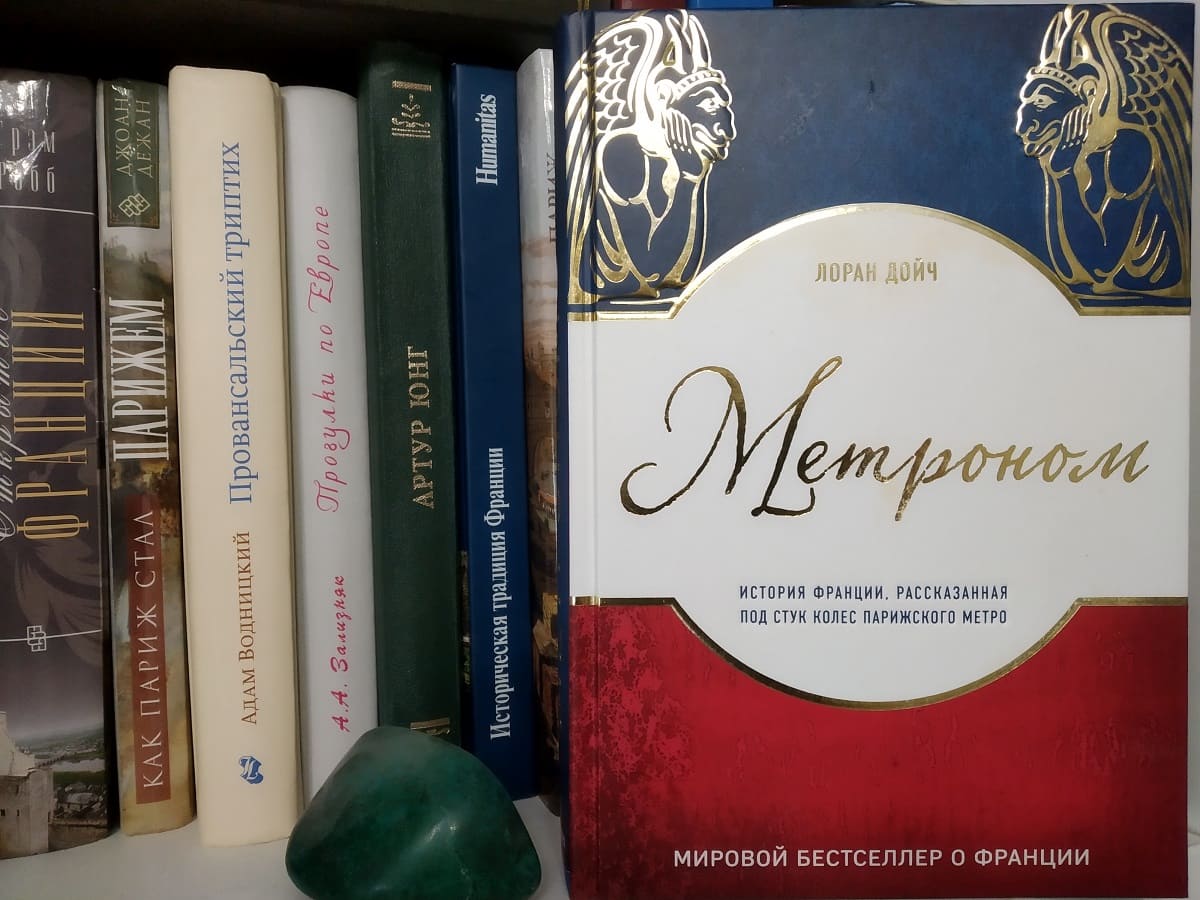
Laurent Deutsch, "Metronome. A History of France Told to the Clatter of the Paris Metro's Wheels"
Laurent Deutsch and his "Metronome" (the shortened title of the already well-known book) have joined the ranks of popular works about France, but we, the readers, fell to thinking a little — and to which genre should we assign the book? There are literary novels, travel notes, serious historical and academic studies... Let us call it "popular historical notes"? And let us go to Paris. By metro.
So what is it that this metronome counts off?
The centuries, of course. With each chapter, each new place (a metro station?), the metronome measures out more and more, and Paris changes. And how whimsical these changes are! How many characters, events, and fates appear before us between the clicks of the metronome! And how many accidents, which shape history...
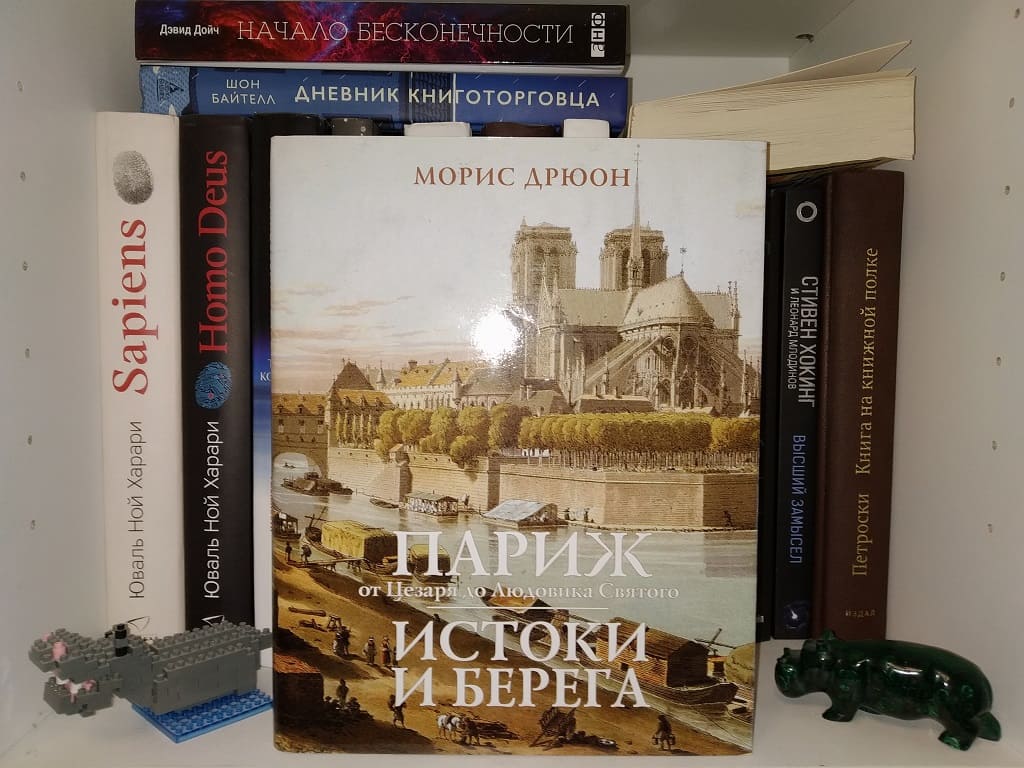
Books on the history of France. Maurice Druon. "Paris from Caesar to Louis the Saint." "Sources and Shores"
From a well-known novelist you expect a novel — and the expectations are borne out. This is a novel — without dialogue, but with intricate plots and denouements. Druon chose a time of which there are not so many historical accounts, and all the more room for the writer in that. He does not, of course, depart from historical truth: but it is a novelist's truth. And it is also a hymn of praise to Paris.
If textbooks on history were even a little like Maurice Druon's "Paris," this discipline would be the favorite of far more people...
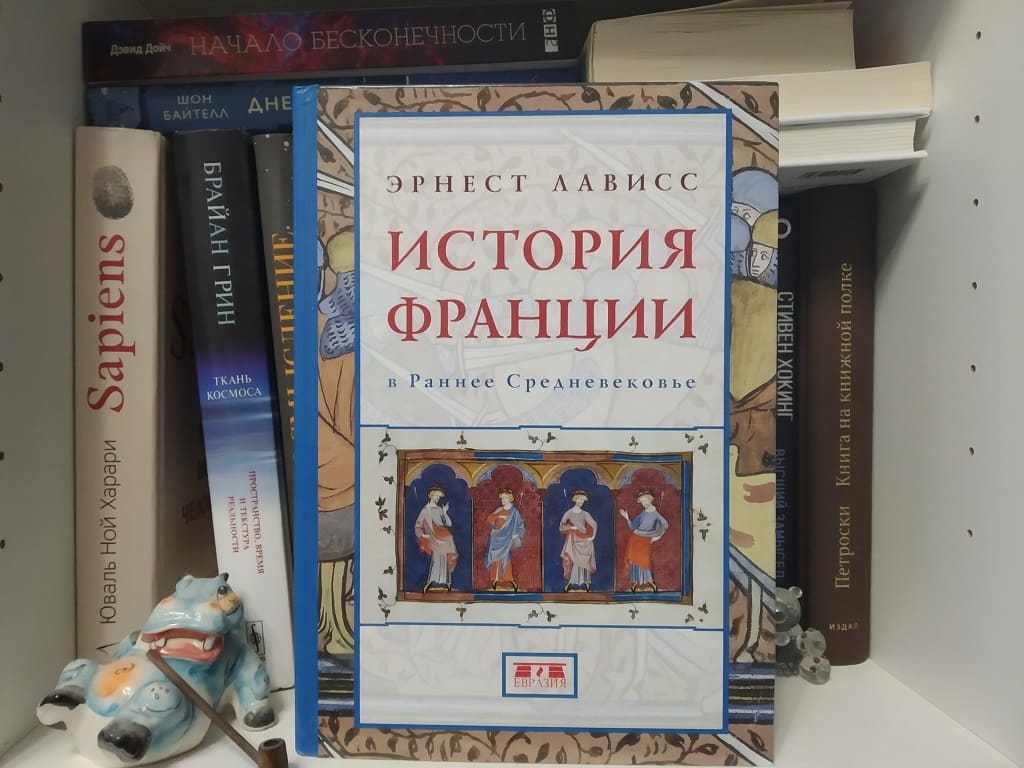
Ernest Lavisse. "The History of France in the Early Middle Ages"
This book is a reissue of the 1913 translation from the 1903 French edition of two parts of the "History of France," compiled by a group of French scholars under the general direction of Professor Lavisse. A long succession of centuries, from prehistoric times to the breakup of Charlemagne's monarchy; from the Paleolithic to the end of the 10th century. Lavisse himself was a gifted — as one would say nowadays — "project manager."
The remarkable translation, beyond all praise, was carried out by O. A. Dobiash-Rozhdestvenskaya. A Russian and Soviet medievalist historian, paleographer, and corresponding member of the USSR Academy of Sciences.
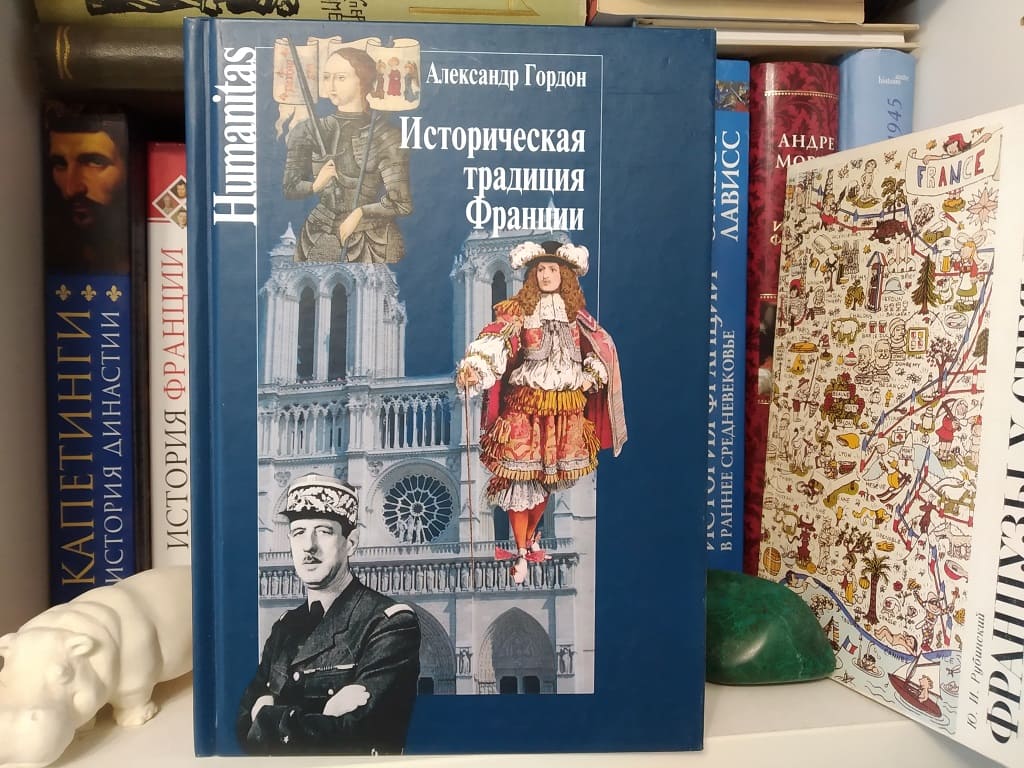
Alexander Gordon. "The Historical Tradition of France"
Books about France by Russian authors are needed and good, as a view from the outside. Not quite a work of history, rather — a coming to awareness. Through history, the regions, the myths of origin, the hopes and the vision of the French themselves. Through the way they wished to see themselves. Gordon wants to show us how tradition appears as the present day. It is very interesting to read, though at times one wants to argue: but that is precisely what is wonderful.
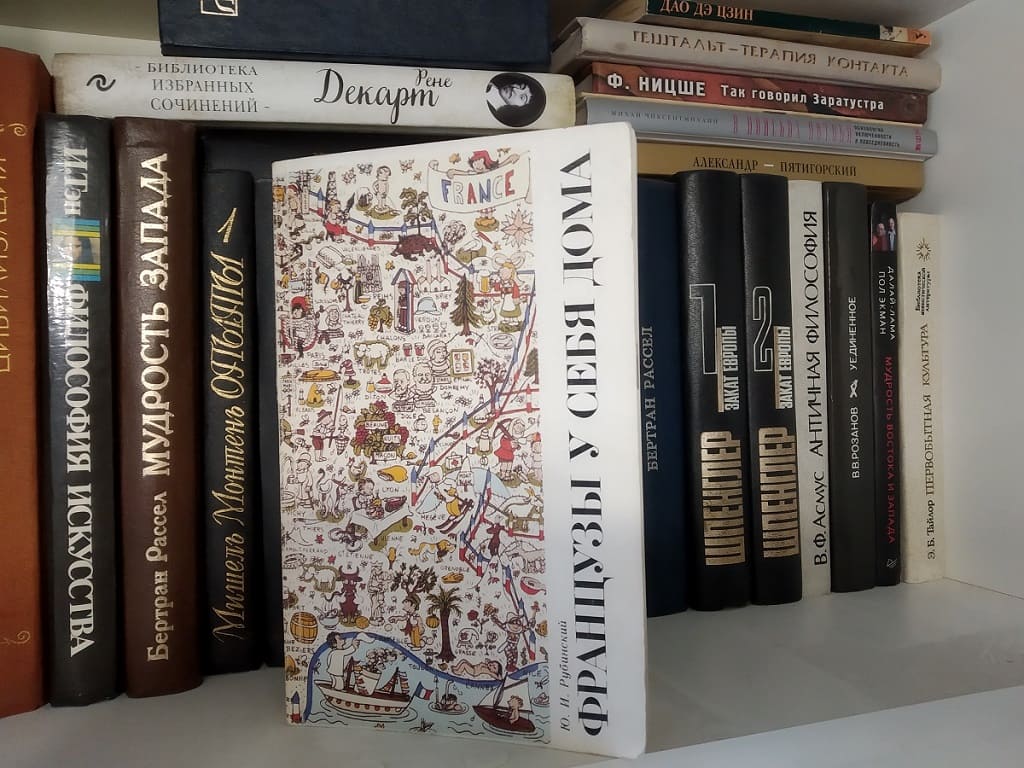
Yuri Rubinsky. "The French at Home"
A greedy, callous, calculating Frenchman, or nothing but d'Artagnans with a little bottle of Burgundy at the tables of tavern-cafés? The characters of charming French comedies — or the rather unpleasant heroes of Balzac's novels? Not one answer will be correct, no one's opinion the final truth. Even were you to live in France for 30 years, you still would not be able to paint a portrait of the Frenchman: you would have to open a whole gallery. All the more valuable, then, are the accounts and observations of unprejudiced (as far as that is possible) people, on whose view there has been laid no forced emigration, no unplanned move (marriage), or anything else of the kind.
 Ave France