
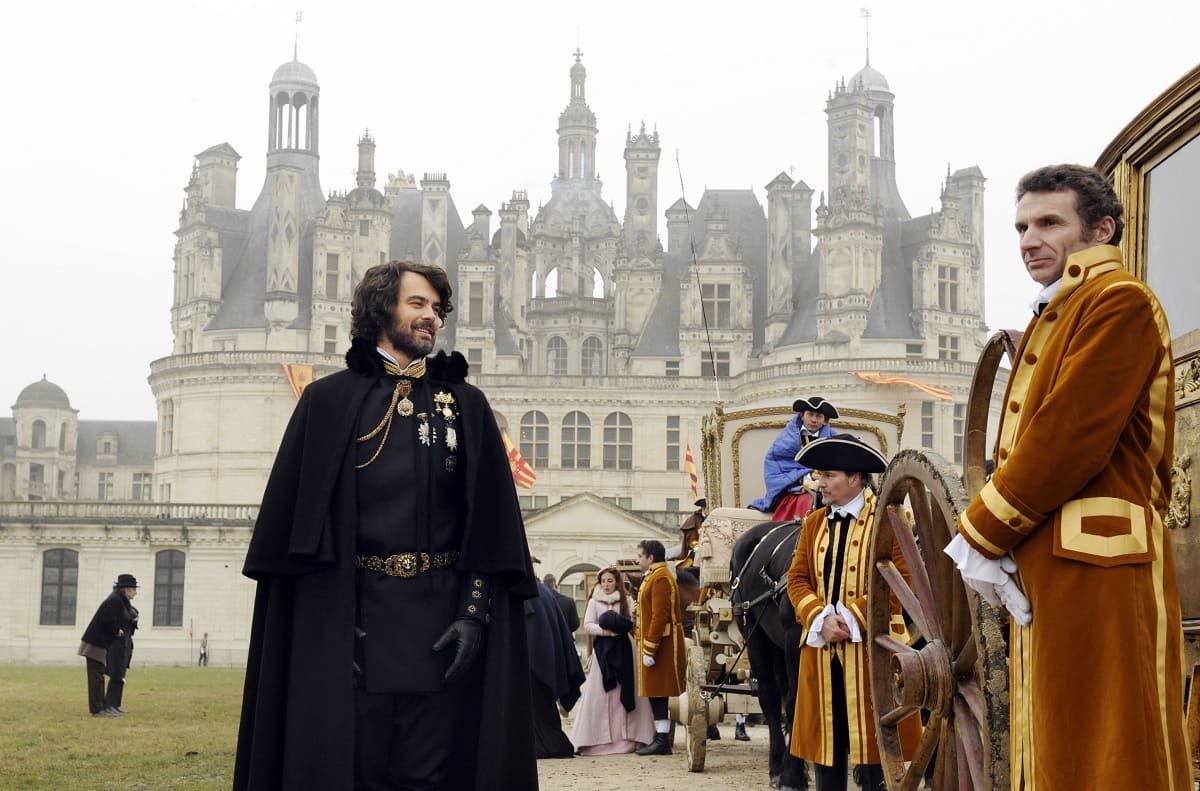
Etiquette (from the French étiquette — a label, an inscription) is the rules of people's conduct in society. Business etiquette in France is likewise the rules "upholding a given society's notions of the fitting." Sometimes rather peculiar ones. In its modern form and meaning, the word was first used at the court of King Louis XIV of France. Back then the guests were handed cards (labels) setting out how they were to comport themselves.
It should be noted that the rules of business etiquette are observed by present-day Frenchmen just as scrupulously as the court etiquette of the times of royal France. At least, that is what is held and taught by numerous manuals, notes, and even guidebooks. We decided to look through and pick out — what, then, is presented nowadays as business etiquette in France.
What Language We Speak
For a long time French was the language of diplomatic intercourse, and so during business meetings with them it is preferable to use French. But under no circumstances speak French during business meetings if your level of the language is low or your pronunciation poor. Better to bring an interpreter or to speak bad English, which will not offend the French in the least. And whatever language you may speak, do it far more quietly and softly than we do. The tone of conversation normal for Russians seems to the French (and not to them alone) raised, and a conversation in raised tones the French neither countenance nor forgive.
Etiquette in France When Communicating
French partners may interrupt their interlocutor in order to voice critical remarks or counterarguments, but they are not inclined to haggle. They do not like to encounter, in the course of negotiations, unexpected changes in their partners' positions, and so they attach great importance to reaching preliminary agreements.
The French often love to argue, are very emotional, and their temperament shows itself not only in conversation but also in their facial expressions and gestures. They love to judge others, yet at the same time take criticism addressed to themselves painfully. If you are in France, never forget this.
In France the style of conducting negotiations is less dynamic than in the USA. The French usually define long-term goals and try to establish close personal cooperation with the party they are negotiating with.
From the very first meeting be cordial and polite, but remember that the French are wary of familiarity in friendly relations.
Interesting points:
- The French introduce themselves by giving first their surname and then their first name. If you cannot tell by ear where the first name is and where the surname is, ask.
- The French are usually direct in expressing their opinion, constantly ask questions, and discuss everything in the minutest detail.
- At informal gatherings, men and women who know each other well often exchange "la bise" — the customary kisses on the cheek.
- Men rise when someone senior in position enters the room.
- When you are in public, do not keep your hands in your pockets. See to it that you do not look gloomy or sullen. Smile in moderation, but above all — be friendly and polite.
When and What We Talk About
Meetings should be arranged in advance. Punctuality is regarded as a mark of politeness. Make sure that the time of the meeting is convenient from both a business and a domestic point of view. Usually working hours are the time from 8:30–9:00 to 18:30–19:00. The lunch (meal) may go on for two hours or more. After 21:00 you should not telephone them at home, and still less talk about business.
In France decisions are made not only at the working table but also at the dining table. The business receptions organized on such occasions may take various forms — for example, a cocktail, a lunch, a dinner, a dinner with spouses invited.
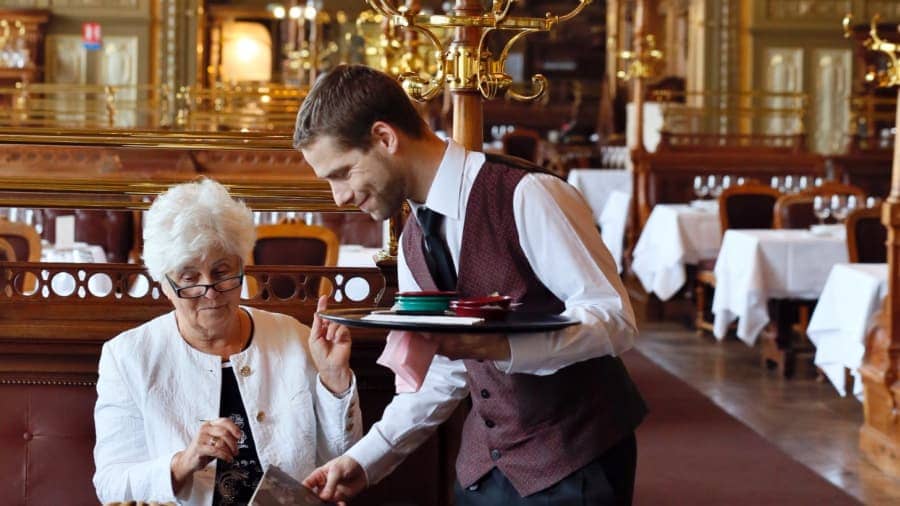
The business lunch begins at 12:30 or 13:00. The business meal is organized either with the aim of exchanging pleasantries or for the discussion of business matters (of late, for these purposes the holding of meetings over breakfast is increasingly practiced). As a rule, the ones invited to the meal are either persons directly taking part in the negotiations or regular business partners. The French side gives its guests advance notice of the makeup of those invited to the reception. At meetings of this kind it is very important to be punctual. In your turn, you too may invite your French business partner to a restaurant. Do not forget, in doing so, to book a table in advance (the exception to the rule being snack bars and cafés, as well as restaurants in hotels).
During a business meal it is the custom to talk of business proper only after the coffee has been served. The French do not like to set about, straight off, discussing the matter that interests them most of all. They approach it gradually, after a long conversation on neutral topics, and as if in passing, without pressure — "between the pear and the cheese," that is, at the end of the meal. To proceed otherwise is considered a sign of bad form; what is more, by displaying your interest, you find yourself in the role of a supplicant.
PATRICK KOVARIK/AFP/GettyImages
For a business meeting the lunch is best suited, but the business dinner is a very widespread phenomenon too (though the evening hours are conducive to more frivolous conversations). In France dinner does not begin earlier than 20:00. The portions of food are usually small, but this is made up for by the large number of dishes. The one who invites to lunch or dinner, as a rule, pays for everyone.
The French prize refined dishes and good wine; the repast, however, must without fail be accompanied by interesting conversation.
The most suitable topics for table conversation will be questions of culture, plays, books, tourist sights, one's native town, political life. A knowledge of French history, politics, and other aspects of the culture will allow you to make a good impression on the French. Be ready to answer questions about your own country, especially concerning politics, the ordering of life.
Etiquette in France Is Tolerance
In conversation show tolerance toward the other point of view; do not try at any cost to talk your interlocutor round — better change the subject or reduce the dispute to a joke. Do not stint on compliments to French cuisine, French nature, French art and literature, the French climate, French automobiles — in a word, to France in any of its manifestations. And if you make a timely and witty joke about the historical rivals of the French, the British, you will earn additional points.
At the same time, in the course of conversation avoid touching on the following matters: religious confession, personal questions connected with one's position at work, incomes and expenditures, one's own illnesses, marital status, political leanings.
We Have a Drink. This Matters
The most varied kinds of this beverage will be offered to you everywhere. In France wine is carefully chosen from the standpoint of its pairing with the dishes, and sometimes several kinds of wine are ordered, suited to different dishes. White wine is usually served with the starters and the fish, and red — with the starters and the meat. Sweet dessert wines are served with the dessert. Even if you are no lover of wine, do not refuse it — simply drink it slowly. At the start of the meal do not order whisky or other strong drinks: the French consider that this dulls the sensations of taste.
As an aperitif you may be offered kir, champagne, or martini. Kir is a mixture of blackcurrant liqueur and white wine; the royal kir (kir royal) is a mixture of blackcurrant liqueur and champagne. In the "wild" kir (kir sauvage) a mixture of various blackcurrant liqueurs is used.
As a digestif (a strong drink that improves the digestion), after dinner unsweetened brandies or distilled fruit spirits (pear, plum) are served. Brandies, cognacs, and Armagnac are usually served in the evening at the end of the dinner.
We Smile and Wave Rejoice and Give Thanks
To be invited to dinner by your business partner in France is considered an exceptional honor. This step expresses, on his part, an aspiration to establish informal relations. In this case spouses are often invited too. One should arrive for the dinner a quarter of an hour later than the appointed time. As a token of gratitude one should present a gift.
But take into account:
- Do not present gifts or souvenirs at the very start of business negotiations — better to do it when you have arrived at an agreement in principle.
- Bring flowers, chocolates, or liqueur with you, and hand over your gift before the evening begins.
- It is not advisable to give the French chocolates, cognac, or champagne of Russian make.
- If you have decided to give flowers, remember that chrysanthemums are brought to funerals, and red roses are for those in love.
Greeting cards for the holidays may be useful, especially if they contain thanks to business partners for working together. New Year's cards in France may be sent until the end of January, by ordinary or electronic mail. To congratulate business partners on Christmas is not the custom. This is a rather delicate point, especially if you do not know his religious confession.
Business Etiquette in France at the Table
- On no account pour the wine yourself. In good restaurants this is done by special waiters who serve the wine. A guest should not ask for wine to be poured for him — he should wait until the host himself offers it. If you are the host, then it is your duty to see to it that all the guests' glasses are filled.
- Better not to help yourself to a second portion of one and the same dish.
- At the end of the repast cheeses are served. The cheese should be placed on the plate, and not straight onto the bread.
- When you are not eating, see to it that your hands (the wrists) lie on the table. This is a very old tradition: a person who keeps his hands on his knees under the table is not trusted.
The kitchen, to the French, is an object of their national pride. The feasts are usually very long, especially if they take place within a close family circle. The most honored place is at the head of the table. The next persons in importance take the places to the right and to the left of the one sitting at the head of the table. If you are received by a married couple, then one of the hosts sits at one end of the table, and the other at the opposite end. Depending on the situation, at an evening reception husband and wife may sit separately — beside people whom they do not know. This is done in order that new acquaintances may be struck up, to keep the conversations at the table going.
It Used to Be Held That...
Business negotiations with the French and etiquette in France are a whole science. The French are gallant rather than polite, skeptical and calculating, wily and resourceful. At the same time they are enthusiastic, trusting, magnanimous. Immanuel Kant remarked that the Frenchman "is courteous, polite, affable, <...> inclined to jest, and easy in company," but he "very quickly becomes familiar." And the English diplomat Harold Nicolson wrote: "The French combine subtlety of observation with a peculiar gift of lucid persuasiveness. They are noble and precise, but intolerant. The average Frenchman is so sure of his intellectual superiority, so convinced of the advantage of his culture, that often he finds it hard to conceal his vexation with the barbarians who inhabit other countries. This gives offense... Their admirable intellectual integrity gives them grounds for considering insincere all the muddled utterances of less lucid minds. They often display vexation and arrogance at a time when it is necessary only to be a little more indulgent."
First photo: ALAIN JOCARD/AFP/Getty Image
 Александр Белянин